As our world becomes increasingly unpredictable, going solar has become almost a necessity. Even though installing solar panels may seem simple, selecting the right solar system for your needs can be challenging.
In order to make an informed decision about the solar system that is both right for you as an investor but also long-lasting, you need to consider factors such as location, electricity costs, and frequency of power outages.
We will simplify the process by explaining the three types of solar systems, their advantages and disadvantages, and how they differ.
What Are The Three Types Of Solar Systems
The three ways in which your solar system by Rooftop Solar Company In Jaipur may work are by being connected to the grid, by being independent of the grid, or by combining both methods. As a result, three types of systems exist:
- An on-grid system
- An off-grid system
- The hybrid system
On-Grid System
Solar systems by Rooftop Solar Company In Jaipur that are grid-tied generate energy only when they are connected to the electrical grid.
Solar panels generate direct current (DC) that is converted to Alternating Current (AC) by the grid-tied inverter. In order for it to replicate the wave, frequency, and voltage of the current flowing into your house, it requires the grid. Due to this, it can only be used when electrical power is available.
The Solar EPC Service In Jaipur system will cease to function if there is a power outage or if grid power is not available.
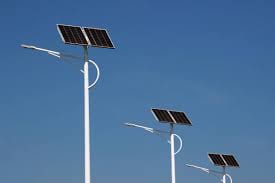
Electricity can be produced by the electrical grid during the night, or when Solar EPC Service In Jaipur panels are not producing enough power. Alternatively, if a net meter is available, excess energy generated by the solar panel is sent back to the utility grid. Your monthly electricity bill includes a deduction for the price at which the electrical company purchases this power from you.
Primary Components: Solar Panel Array, Inverters, Meters, and Utility grid
This product is suitable for Residential, commercial, and industrial properties where grid power is readily available.
Pros:
- Installing and maintaining the system is easy
- Unlike battery backup systems, it is more economical
- The electrical company sells surplus solar energy instead of wasting it
- Power can be supplied by the grid on cloudy or low-generation days
Cons:
- Electricity cannot be stored
- Electricity will not be supplied during the night.
- As it is dependent on the power grid, it does not work during power outages
Off-Grid System
Since the off-grid systems are equipped with battery backups, they are completely independent from the grid. While the batteries are being charged, the inverter runs the home appliances during the day. In the event of a power outage or at night, the stored power can be used.
Solar panels by Rooftop Solar Company In Jaipur can be used to charge batteries first or to power your house on an off-grid system. Despite frequent power cuts, remote and rural areas can benefit from this type of solar installation.
There are, however, some disadvantages to this method. It is impossible to operate the solar panels when there is cloud cover, rain, or shade, etc., and the battery backup runs out. Due to this, people generally connect their off-grid system to their regular electricity connection.
The panels can also be extremely efficient at times, generating more energy than what is required to charge a battery and run all appliances. Whenever surplus energy is wasted, it goes to waste.
Primary Components: Solar Panel Array, Inverters, and Batteries
This product is suitable for Lands, agricultural lands, and industrial properties in rural and remote areas
Pros:
- Provides consumers with full energy independence
- Provides electricity storage that can be used at night
- Provides protection against power outages and grid failures
Cons:
- Batteries are recurring costs, which makes them more expensive than on-grid systems
- They are bulky, have a short shelf life, and are not very eco-friendly
- Wastes excess energy
- Low power generation through panels makes the system unusable
Hybrid Systems
There is a relatively new technology in the solar market called hybrid systems. A solar system that connects to the utility grid and stores excess energy in a battery.
Solar inverters work as on-grid inverters when electrical energy from the grid is available. It will function like an off-grid inverter when the power goes out.
With a hybrid system, power is always available, regardless of the situation. While the home devices are being powered by the panels, the excess energy is used to charge the battery during the day. Surplus energy is returned to the utility grid if there is a surplus.
When there is no sunlight during the night, the stored power can be used. As a backup, the grid can provide power when the battery is fully discharged and the generation is low.
Primary Components: Solar Panel Array, Batteries, Inverters, Meter, and the Utility grid
Suitable for residential, commercial, and agricultural areas, as well as industrial sites
Pros:
- Load management technology is included
- By storing electricity, it provides continuous power supply
- As surplus energy is sent back into the grid, there is no loss of energy
Cons:
- Battery costs are high
- The cost of installation is high
- A longer break-even period
How to Choose the Right System?
The following questions must be answered before you choose the type of solar system you will use.
1. What is the accessibility of electricity in your area?
2. What is the frequency of power outages?
3. How much does residential/commercial electricity cost?
4. What is your budget for solar installations?
Your energy needs can be met by an on-grid system if electricity is readily available and blackouts are rare in your area. Off-grid systems can store excess energy for later use if power outages are common.
The surplus power sold back to the grid can reduce your electricity bills if the cost of electricity is high.
Additionally, if your solar budget is substantial, consider hybrid solar systems that combine the advantages of both on-grid and off-grid systems.
Having learned about the advantages and disadvantages of on-grid, off-grid, and hybrid systems, you’re ready to install solar panels. Follow the 7-point checklist to ensure you’re maximizing your solar power system’s value.
The Sun Shakti Solar EPC Service In Jaipur Company
Our goal is to make solar affordable, reliable, and easy by partnering with world-class brands of solar panels and inverters. Our company also provides top-quality solar accessories that can be customized to suit your needs.